
One of the most important things about spam protection is the detection rate. Everybody wants a spam protection method with a 100% detection rate. But the reality is: that’s impossible (at least for a longer time range).
No spam detection method achieves a 100% detection rate. A lot of solutions reach detection rates of 90% or more percent – in the best case, 99.9%. It is possible to reach a 100% detection rate for a specific time period. But since new spam methods are developed daily or weekly, a 100% detection rate over the course of a year is impossible.
So, what about mosparo? After the first release of mosparo, back in 2023, we wrote that mosparo can reach up to 80% and more. Some feedback we received was that this number is too low for a modern spam protection method. And we understand that. But the reality is more complex.
The reason for this low percentage was that we don’t like fake marketing promises. We try to be real and tell the users the real numbers – not the theoretical ones.
When you install mosparo, the detection rate of mosparo is 0% – because no rules exist and therefore nothing could be detected. With version 1.5, we’ve added submission rules, which can detect spam, but they need to be enabled first.
You may ask now, why should you use mosparo with a 0% detection rate? The answer is simple: as soon as you receive the first spam submission that was not detected as spam, you set up a rule to block a keyword or other information associated with the spam user. For example, the provider’s IP address or AS number. With this simple rule, this spam user cannot submit the same spam again, and your mosparo spam detection rate is 100% without collecting any unnecessary data or solving any puzzles.
In the last few months, we have received several reports from users sharing their success stories with us. The detection rate for these mosparo projects was above 95%. In one example that we received, the detection rate is above 99% for 30 days.
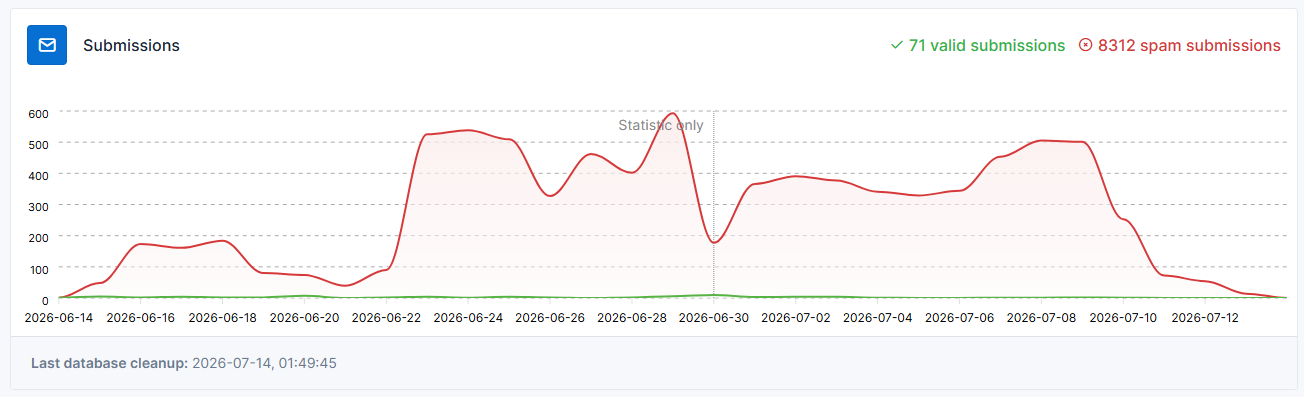
What did the project owners do to achieve such results, you may ask? The project from the screenshot above has two rules: one for AS numbers and one for IP addresses. Additionally, around the 7th of July, version 1.5 was installed, and the random values submission rule was enabled. So, in total, the project has three rules, one of which is predefined.
The project owner added the IP addresses or AS numbers of the unidentified spam submissions to the rules. Within a few days, the rules were so effective that the detection rate exceeded 95%. At the end of the 30 days shown in the screenshot above, the detection rate was 100% because the valid submissions were real form submissions, meaning mosparo filtered 100% of the spam.
Of course, managing the rules costs some time. But since you can do that once a day or once a week, it usually takes no more than 15 minutes. On the other side, you can prevent spam without puzzles, without collecting massive amounts of data, and without wasting CPU energy.
In the upcoming version 1.6, we’re adding a simpler method to add values to field rules and to create new field rules directly from the submission view page, which helps you reduce the time required to maintain the rules.
So, in the end, the detection rate of mosparo is on the same level as other services, but with the huge difference that mosparo does not use any puzzles or tracking methods to identify humans. Yes, you have to invest some time to create the rules. But compared with the negative costs of bad data privacy and poor usability, this should not be a showstopper.
We’re always happy to hear your stories – either success or failure with mosparo. Let us know how we can improve to make it easier and more effective to catch spam without collecting unnecessary data or wasting energy. You can contact us via email (feedback@mosparo.io) or share your feedback in the GitHub discussions.